

Wizard Trees Live Resin Vape: What B2B Buyers Should Know About Premium Extract Trends and Hardware Selection

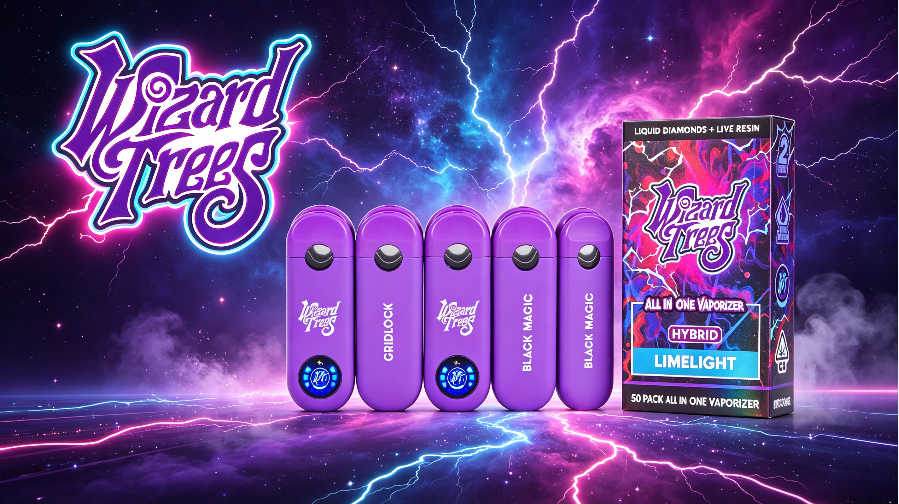
Discover the Best Wizard Trees Disposable Pens Near Me: A Local’s Guide
A search for “disposable Wizard Trees pens near me” may look like a consumer query.
For a cannabis retailer, distributor, purchasing manager, or product-development team, however, “near me” should trigger a very different set of questions:
Is the product available through a licensed local supply chain? Is the vape SKU actually moving at retail? Is the supplier authorized? Can inventory be replenished quickly? And does the hardware meet the quality standards required for a premium cannabis brand?
Those questions matter because the U.S. cannabis vape market is changing rapidly.
BDSA’s latest national data shows that vape generated approximately $8 billion in U.S. retail sales during the 12 months ending May 2026, representing about 26% of total cannabis retail sales. Disposable vape sales grew roughly 41%, from $2.7 billion to $3.8 billion, while cartridge sales declined 14%. Disposables overtook cartridges nationally in April 2026.
Wizard Trees is also expanding quickly as a cannabis brand—but its current product mix tells procurement teams something important.
Headset’s August 4, 2026 data snapshot shows Wizard Trees generating more than $500,000 in July tracked sales, with overall brand sales up approximately 839% year over year. Yet Vapor Pens accounted for only 1.27% of the brand’s July sales, compared with 82.76% for Flower and 15.96% for Pre-Rolls.
That means buyers should distinguish between brand momentum and vape-format momentum.
A popular flower brand does not automatically become a high-velocity vape brand.
And that makes local market verification especially important.
Why Searches for Disposable Wizard Trees Pens Near Me Matter to B2B Buyers
The phrase disposable Wizard Trees pens near me represents three purchasing signals at once:
brand demand + vape-format demand + local availability.
Each signal has commercial value.
But they should not be treated as interchangeable.
Wizard Trees currently has substantial retail distribution. Headset reports that the brand is stocked at 307 licensed dispensaries across California, New York, and three additional states, including 122 locations in California. Its strongest California store coverage is concentrated around markets including Los Angeles, San Francisco, Sacramento, San Jose, and Santa Rosa.
Wizard Trees’ own store locator similarly lists retailers across a broad range of California cities, including Los Angeles, Sacramento, San Jose, San Francisco, Santa Ana, Oakland, Long Beach, San Diego, and others.
But procurement managers should notice the distinction:
A store carrying Wizard Trees does not necessarily mean that store carries a Wizard Trees vape SKU.
That difference becomes critical when using “near me” search volume or brand retail coverage to forecast inventory.
Wizard Trees Vape Availability Is Real—but Currently Niche
There is current evidence of Wizard Trees integrated vaporizer products in the regulated retail ecosystem.
For example, Weedmaps currently lists a Wizard Trees New Yorker 1g Live Resin Disposable, describing it as an all-in-one product with three heat settings and adaptive power.
At the same time, Wizard Trees’ main official product catalog currently emphasizes Flower, Seeds, and Pre-Rolls rather than presenting Vapor Pens as a major standalone product category.
Headset’s retail data reinforces that picture.
In July 2026:
| Wizard Trees Category | Share of Tracked Sales |
|---|---|
| Flower | 82.76% |
| Pre-Roll | 15.96% |
| Vapor Pens | 1.27% |
Headset also recorded Wizard Trees Vapor Pens declining approximately 64.53% month over month in July.
This does not mean buyers should dismiss the format.
It means they should approach it as a developing product opportunity rather than assuming it is already a core brand category.
For procurement managers, that distinction can prevent expensive over-ordering.
The Broader Disposable Market Is Moving in the Opposite Direction
The interesting part of the Wizard Trees story is that its current vape mix is small while the overall U.S. disposable market is expanding rapidly.
BDSA reports that U.S. disposable cannabis vapes grew approximately 41% year over year to $3.8 billion during the 12 months ending May 2026. Cartridge sales fell from roughly $4.85 billion to $4.19 billion over the same period.
The category crossed an important threshold in April 2026 when disposable revenue exceeded cartridge revenue nationally for the first time.
BDSA attributes the shift to factors including:
- consumer demand for convenience and portability;
- intense disposable price competition;
- development of larger-capacity devices;
- and increasing investment in all-in-one hardware.
For a brand historically associated with premium flower, that creates an obvious strategic opportunity.
But it also creates a positioning challenge.
If customers associate Wizard Trees with premium genetics and high-end flower, an inferior vape device can dilute rather than strengthen the brand.
Premium Oil Is Becoming More Important Too
Disposable growth is only one part of the current vape transformation.
Premium extracts are simultaneously gaining market share.
BDSA reports that live resin and rosin together generated approximately 32% of U.S. vape revenue during the most recent 12-month period, up from 28% during the prior year. Live resin alone increased 19% to approximately $2.1 billion and reached 28% of vape revenue in the most recent months measured.
That is particularly relevant when evaluating Wizard Trees-style products because current marketplace listings include 1g live-resin all-in-one devices.
For procurement teams, the implication is important:
The next disposable opportunity is not necessarily the cheapest distillate device.
Brands with strong flower identities may have a more credible path through premium extract formats that preserve strain identity and brand positioning.
Hardware needs to support that strategy.
California Shows Why Local Market Data Matters
Wizard Trees is Los Angeles-based and maintains substantial California distribution, making California an especially useful market to examine.
California remained the largest tracked U.S. legal cannabis market in July 2026.
Headset reported approximately $332.8 million in July cannabis sales, up 2.7% year over year, with more than 18.6 million units sold.
Vapor Pens generated approximately $97.87 million that month—almost 30% of California cannabis sales—and grew 1.1% year over year. Flower remained slightly larger at approximately $103.12 million.
Meanwhile, average cannabis item price in California fell to approximately $17.85, compared with $19.18 one year earlier.
That combination is significant for buyers:
large vape demand + price compression + intense competition.
A premium-branded vaporizer therefore needs to justify its price through product quality, formulation, hardware performance, brand equity, or some combination of all four.
California’s Legal Market Is Still Commercially Significant
California’s regulated cannabis economy also remains substantial from a tax and retail perspective.
The California Department of Tax and Fee Administration reported approximately $956.7 million in cannabis sales for Q1 2026, generating nearly $248 million in cannabis-related state tax revenue during the quarter.
But local market access remains uneven.
The California Department of Cannabis Control reports approximately 4.27 retail cannabis licenses per 100,000 residents as of February 2026, while individual cities and counties can impose additional restrictions or prohibit particular cannabis business activities.
That means “near me” has real commercial significance.
Two California cities within the same broader metropolitan region can have completely different retail density, licensing conditions, menu competition, and replenishment opportunities.
“Near Me” Should Mean Licensed and Verifiable
For B2B procurement, geographic proximity is not enough.
California’s Department of Cannabis Control maintains a license-search database that is updated daily and allows users to confirm whether a cannabis operator has an active state license.
DCC also states that cannabis retailers can sell cannabis goods only through the licensed system and that cannabis goods offered by retailers must have completed required testing and quality-assurance review.
Professional buyers should therefore evaluate local supply in this order:
License → product identity → SKU availability → documentation → price.
Not:
Price → everything else.
A product appearing in a search result does not by itself establish that it belongs in a licensed commercial supply chain.
Brand Coverage Is Not the Same as Product Availability
This is one of the most important procurement lessons from the disposable Wizard Trees pens near me keyword.
Headset shows Wizard Trees in hundreds of licensed retail locations.
But the company’s Vapor Pen share is currently only 1.27%.
That means a retailer may carry:
Wizard Trees flower + Wizard Trees pre-rolls
without carrying:
Wizard Trees integrated vaporizers.
A procurement manager building a regional forecast should therefore measure product-specific distribution rather than brand-level distribution.
Ask:
How many stores carry the vape SKU?
How many sold at least one unit in the past 30 days?
What is the average weekly velocity?
What percentage reorder?
What is the days-of-supply position?
Those numbers are more commercially useful than simply counting stores carrying the brand.
A Fast-Growing Brand Can Still Have an Experimental Vape Program
Wizard Trees demonstrates another important principle.
Brand growth and category diversification happen at different speeds.
Headset reports Wizard Trees sales increasing approximately 839% year over year, while its average item price increased 58.1% to $43.56.
That is substantial growth.
But Flower still drives more than four-fifths of tracked sales.
From a procurement perspective, Vapor Pens may therefore represent an adjacent-growth experiment rather than a mature category.
This can create opportunity.
A product-development partner capable of translating premium flower genetics into a technically reliable vape platform may help a flower-first brand extend into a rapidly growing format.
But buyers should look for evidence that the extension works commercially before committing to aggressive forecasts.
California Buyers Need to Be Careful With the Word “Disposable”
There is also an important terminology issue.
Consumers commonly search for products using phrases such as “disposable vape” or “disposable Wizard Trees pens.”
California compliance language is different.
The Department of Cannabis Control refers to these products as integrated cannabis vaporizers and requires specific disposal messaging in advertising and marketing.
California rules also prohibit packaging and labeling for cannabis cartridges and integrated vaporizers from indicating or implying that they can simply be thrown into ordinary trash or recycling streams. DCC requires messaging explaining that an empty integrated cannabis vaporizer should be disposed of through an appropriate household hazardous-waste facility or other approved facility.
For marketing teams, this creates an important distinction:
SEO terminology and compliant package terminology are not always identical.
A buyer developing a private-label vaporizer for California should have packaging and advertising reviewed against the current DCC requirements rather than copying terminology from consumer search queries.
Integrated Vaporizers Also Create Battery-Supply Responsibilities
A cannabis all-in-one contains more than extract and a heating element.
It also contains a lithium battery.
That means battery documentation needs to be part of supplier qualification.
The U.S. Pipeline and Hazardous Materials Safety Administration states that lithium cells and batteries must undergo the applicable testing under UN Manual of Tests and Criteria, Section 38.3 before transportation. PHMSA also requires manufacturers and subsequent distributors of covered lithium cells and batteries to make test-summary documentation available through the supply chain.
UN 38.3 testing addresses transportation-related conditions including:
- altitude;
- thermal conditions;
- vibration;
- shock;
- external short circuit;
- impact/crush;
- overcharge;
- and forced discharge.
For a procurement manager, the takeaway is simple:
Do not approve an integrated vaporizer based solely on the oil-contact components.
The battery is part of the finished-product risk profile.
What Buyers Should Request From an OEM Vape Hardware Supplier
If your company is evaluating hardware for a Wizard Trees-style premium cannabis vape program—or any lawful private-label integrated vaporizer—the sourcing package should go beyond MOQ and FOB price.
1. A Production-Representative Golden Sample
The approved sample should represent the actual materials and components intended for mass production.
Do not accept a sample built with premium components if mass production will use a different battery, ceramic core, PCBA, adhesive, or housing.
2. A Locked Bill of Materials
Document at minimum:
- battery cell;
- PCBA;
- heating element;
- reservoir;
- oil-contact materials;
- seals;
- housing material;
- charging interface;
- and firmware version.
Any substitution should require written approval.
3. Battery Documentation
Request the applicable UN 38.3 test summary and confirm that it corresponds to the battery design being used in production.
4. Formulation Compatibility Testing
Premium live resin hardware should be tested with the actual intended formulation.
Different viscosities can behave differently during storage and heating.
Evaluate:
leakage, clogging, oil movement, vapor consistency, heating performance, and performance after aging.
5. Failure-Rate Standards
Define acceptable thresholds for:
- dead-on-arrival units;
- leakage;
- charging failures;
- heating failures;
- airflow problems;
- cosmetic defects;
- and packaging failures.
Without agreed metrics, “good quality” means different things to different suppliers.
6. Lot Traceability
Every production batch should be traceable to component lots, manufacturing date, QC inspection, and relevant battery documentation.
This makes root-cause analysis much faster if problems appear in the field.
The Supplier Should Understand Cannabis Compliance—Not Just Hardware
A factory can produce excellent electronics and still be the wrong partner for a regulated cannabis program.
California’s cannabis supply chain operates through licensing and track-and-trace requirements designed to follow commercial cannabis activity from production through distribution and sale. DCC’s current 2026 regulatory work continues to strengthen track-and-trace safeguards and data accuracy requirements.
That means an OEM partner should understand the distinction between:
hardware manufacturing and licensed cannabis-product manufacturing.
For branded goods, buyers also need to confirm trademark and distribution authorization.
A supplier’s ability to print Wizard Trees branding does not establish the legal right to manufacture products under that trademark.
For private-label programs, the lower-risk approach is to develop original hardware, industrial design, packaging, and brand assets rather than copying another company’s trade dress.
Procurement Managers Should Track Sell-Through, Not Social Hype
Wizard Trees illustrates why brand heat and commercial vape performance should be measured separately.
The brand is growing rapidly.
But Vapor Pens remain a small part of its current sales mix.
That means purchasing teams should avoid using social engagement as their primary forecasting model.
Instead, track:
weekly unit velocity per door
percentage of stores reordering
average retail price
promotion dependency
return rate
gross-margin dollars per unit
inventory days on hand
SKU-level distribution growth
A vape SKU that generates strong repeat orders from 50 stores may ultimately be more valuable than one appearing in 300 stores with weak sell-through.
Local Inventory Can Reduce Trend Risk
There is another reason B2B buyers should care about nearby supply: speed.
The cannabis vape market is moving fast.
Disposable sales increased about 41% in the latest BDSA reporting period, premium live resin and rosin continued gaining share, and the number of active U.S. vape brands tracked by BDSA fell roughly 17% year over year—from more than 6,600 to fewer than 5,500.
More than 1,100 active brands effectively disappeared from the tracked competitive set within 12 months.
That is an important warning for inventory managers.
The category is growing.
The number of brands surviving inside the category is shrinking.
A six-month inventory commitment to the wrong product can therefore be much more expensive than paying slightly more for flexible replenishment.
Regional warehousing, lower opening MOQs, and shorter reorder lead times can have significant strategic value.
“Best Near Me” Should Be a Procurement Scorecard
For a professional buyer, the “best” disposable Wizard Trees pens near me should not simply be the closest inventory.
A useful supplier scorecard might weight five areas:
| Procurement Factor | What to Evaluate |
|---|---|
| Legal Supply Chain | Active licenses, authorized parties, correct state market |
| Product Authenticity | Brand authorization, SKU identity, lot documentation |
| Sales Performance | Sell-through, reorder rate, margin, market-specific demand |
| Hardware Quality | Leakage, heating, battery, charging, oil compatibility |
| Supply Reliability | Lead time, regional inventory, traceability, CAPA support |
The most attractive supplier should perform well across all five.
A low price cannot compensate for an unverifiable product.
And brand recognition cannot compensate for unreliable hardware.
What the Wizard Trees Data Really Tells Buyers
There are two stories happening simultaneously.
The first is the brand story.
Wizard Trees is growing rapidly, with Headset reporting an approximately 839% year-over-year increase in tracked sales and distribution across hundreds of licensed stores.
The second is the format story.
The broader U.S. disposable vape market is expanding quickly, but Vapor Pens currently represent only around 1.27% of Wizard Trees’ tracked sales.
That gap creates the interesting business question.
Can a premium, flower-led brand translate its genetics, reputation, and positioning into a scalable vape platform?
For distributors and product-development teams, that is more valuable to investigate than simply asking whether a Wizard Trees disposable is popular today.
The Bottom Line
The search for disposable Wizard Trees pens near me reflects a broader shift in cannabis retail.
Consumers increasingly value integrated vape formats, and BDSA’s latest figures show disposables overtaking cartridges nationally while the overall vape category reaches approximately $8 billion in annual U.S. retail sales.
Wizard Trees brings something different to that opportunity: a rapidly growing premium flower brand with significant licensed retail distribution.
But the latest data also shows that Vapor Pens remain a relatively small part of its current portfolio.
For procurement managers, that means the correct strategy is not:
“Wizard Trees is growing, so buy more vape inventory.”
It is:
“Verify local vape demand, authorized supply, SKU-level velocity, hardware quality, and regulatory fit before scaling.”
In today’s market, “nearby” should mean more than geographic distance.
It should mean:
licensed, verifiable, traceable, replenishable, and commercially relevant.
Evaluating a Premium Disposable Vape Supplier or OEM Partner?
If your company is developing an integrated vape platform for a lawful, licensed cannabis market, begin the supplier conversation with technical documentation and compliance requirements rather than unit price alone.
Request a production-representative sample, locked BOM, battery specification, UN 38.3 documentation, oil-contact material information, formulation compatibility testing, QC standards, lot traceability, packaging requirements, and a clearly defined corrective-action and warranty process.
For established branded products, independently verify authorization and the applicable licensed distribution chain.
For private-label development, work with an OEM partner capable of creating original, non-infringing hardware and packaging around your own positioning rather than reproducing another cannabis brand’s identity.
A qualified supplier should be prepared to discuss engineering, quality control, compliance, customization, production capacity, MOQ, lead time, and after-sales support in the same conversation.
That is the foundation of a scalable cannabis vape program—and a much better definition of “best nearby” for a professional buyer.